
Each year, the Ethereum community hosts an annual event bringing together developers, researchers and the broader ecosystem for a week of deep-dive, topic-focused events. This year is no exception, with the Ethereum’s World Fair at Devconnect, Buenos Aires, Argentina.
This year’s Devconnect was the largest yet, bringing over 20,000 participants from 130 countries, including more than 10,000 Argentinians and 5,000 developers, alongside 79 exhibitors and 200 volunteers, with hundreds of events spread across the city.
For ECH Institute, Devconnect is an important touchpoint in community building. With the upcoming Fusaka upgrade and our work supporting Ethereum’s EIP and ERC process, Devconnect is a valuable opportunity for us to connect with core developers, client teams, researchers and more importantly, builders.
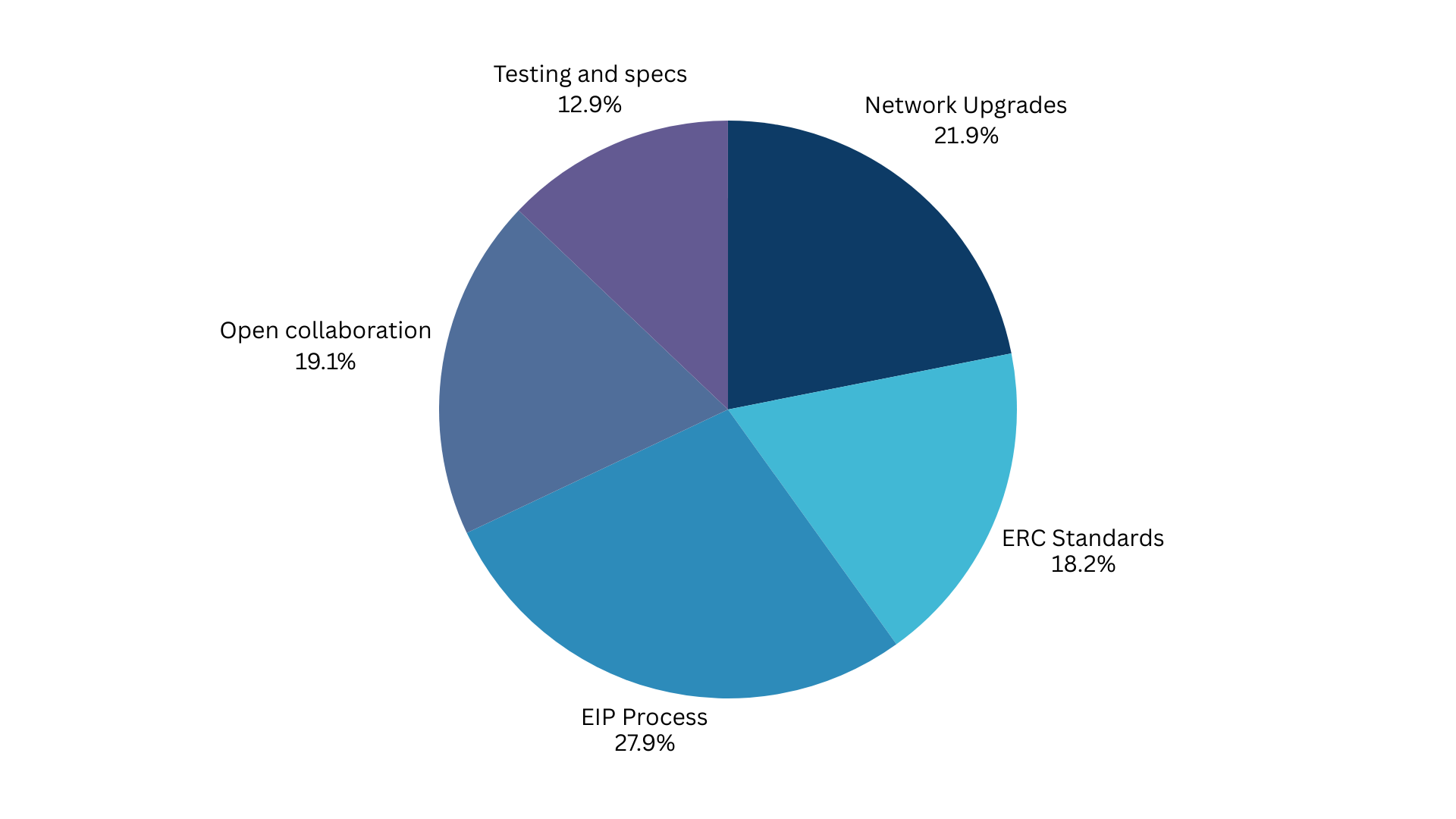
At Devconnect, we hosted two events, a Women in Ethereum Protocol networking brunch and the EIP Summit. At the EIP Summit, many of the attendees were researchers (24%) and core developers (15%), followed by app builders (12%), students (11%) and others (38%). Each of these events connected us with different people in the ecosystem, enriching our community's perspective of the diverse work in the Ethereum ecosystem.
WiEP Networking Brunch
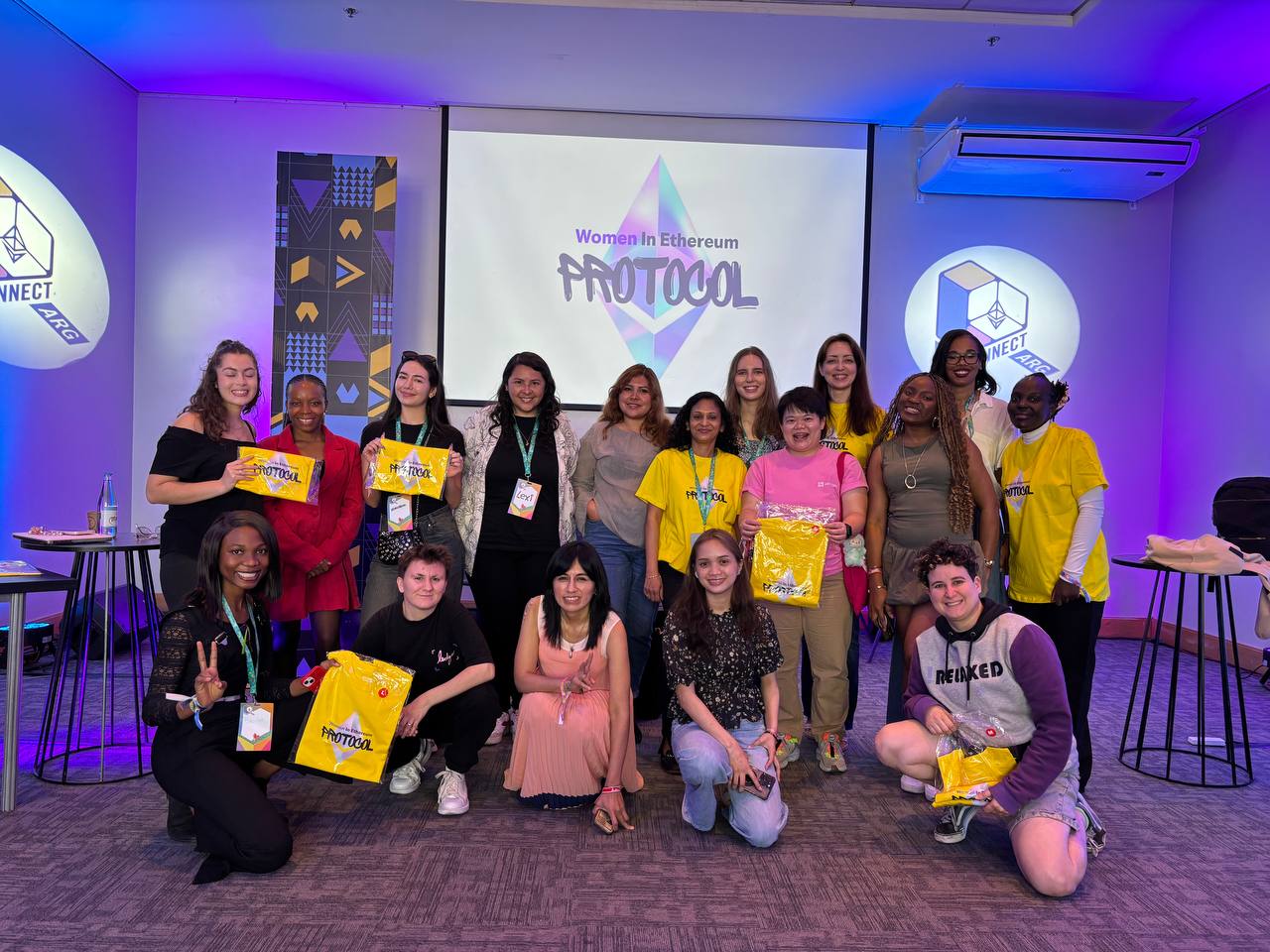
Kicking off Devconnect, ECH Institute helped host the Women in Ethereum Protocol (WiEP) networking brunch at La Rural.
The morning opened with a “Meet the Women behind the Protocol” session, giving attendees time to connect informally and learn what others are working on across client teams, contributors and coordination roles. It included sharing sessions from Katya, a core developer and former WiEP Study Group Coordinator, and Mercy, a current WiEP Study Group Coordinator. This sharing session was followed by a short opening remark from La Donna and Pooja, who shared an overview of WiEP as an initiative focused on supporting more women and non-binary folks in the Ethereum protocol.
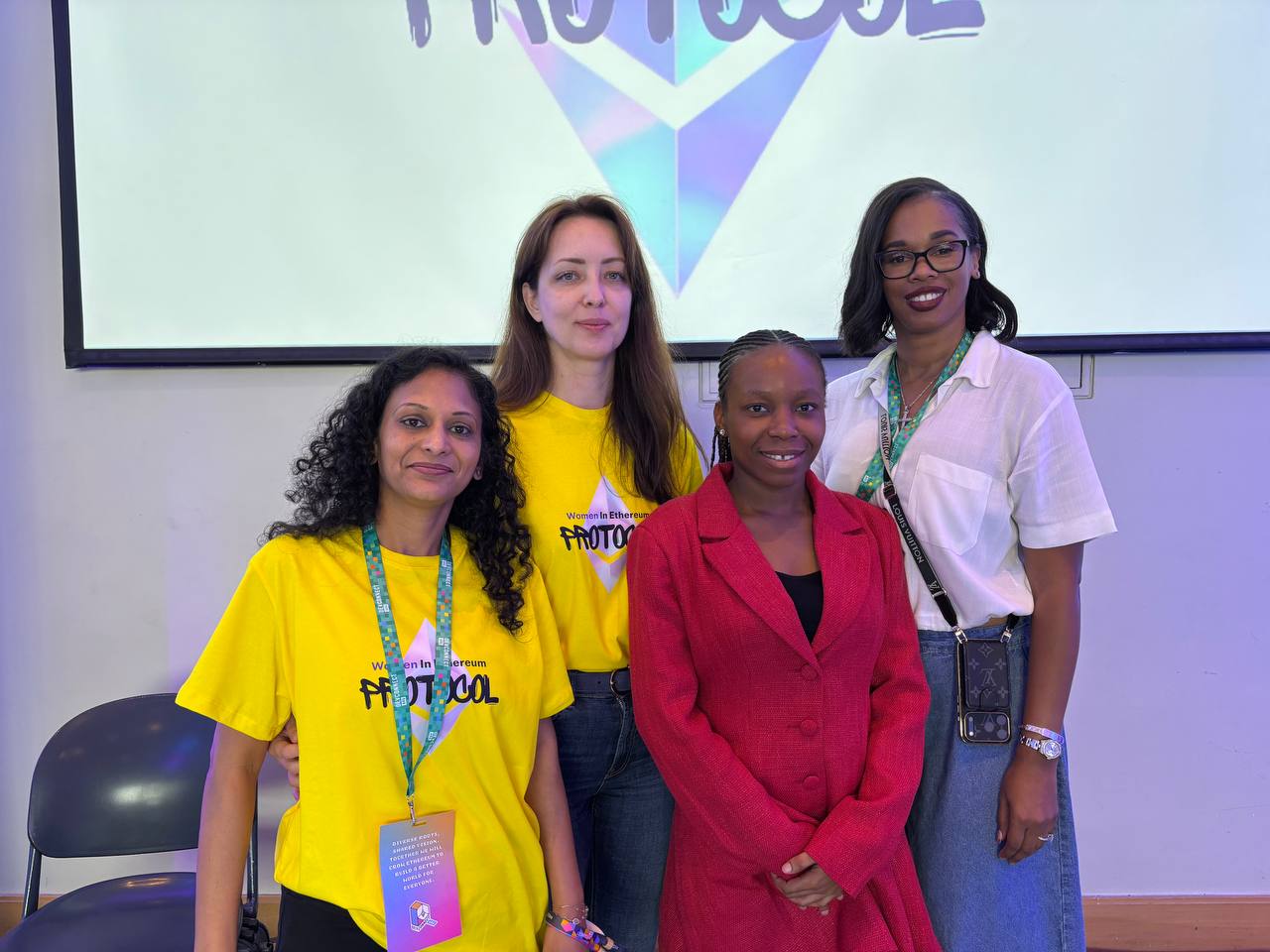
Throughout the brunch, the conversations kept circling back to having peer support for contributors and having opportunities to be involved in making pull requests to protocol repositories on Github. It was exciting to meet women attendees who were part of previous Study Groups and interact with aspiring contributors, highlighting strong interest in protocol development and peer support amongst developers, mentors and mentees.
The brunch was a nice reunion for existing contributors and newcomers, bridging newcomers with contributors at the core protocol layer.
EIP Summit
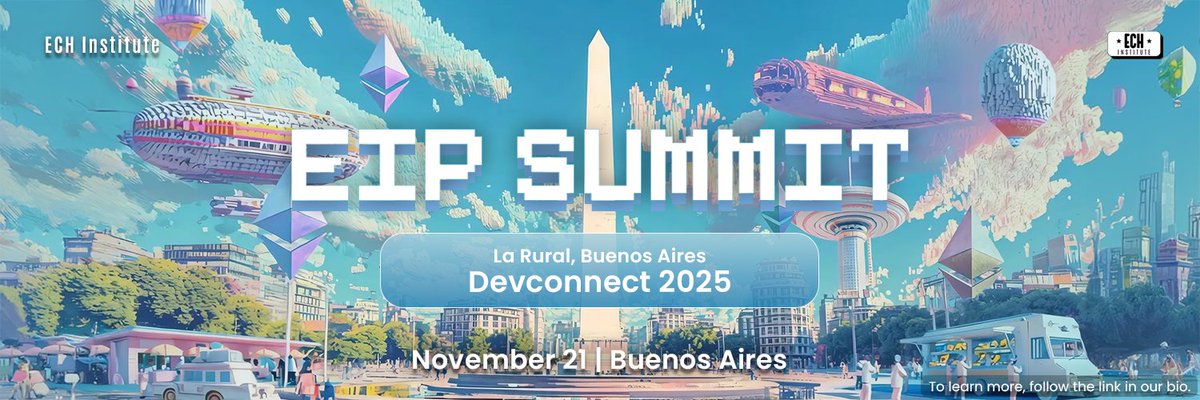
Building on this focus of inclusion and learning, the EIP Summit at Devconnect brought together the people who shaped Ethereum from ideas to protocol improvements. The half-day event traced the lifecycle of an Ethereum Improvement Proposal (EIP), from early research, engaging feedback from the community and EIP/ERC editors, to writing specifications and ensuring mainnet upgrade readiness.
Many of the attendees who joined the EIP Summit had strong interests in the EIP Process and ERC Standards, followed by network upgrades and testing and specs. We were fortunate to have a wide range of speakers that covered different topics.
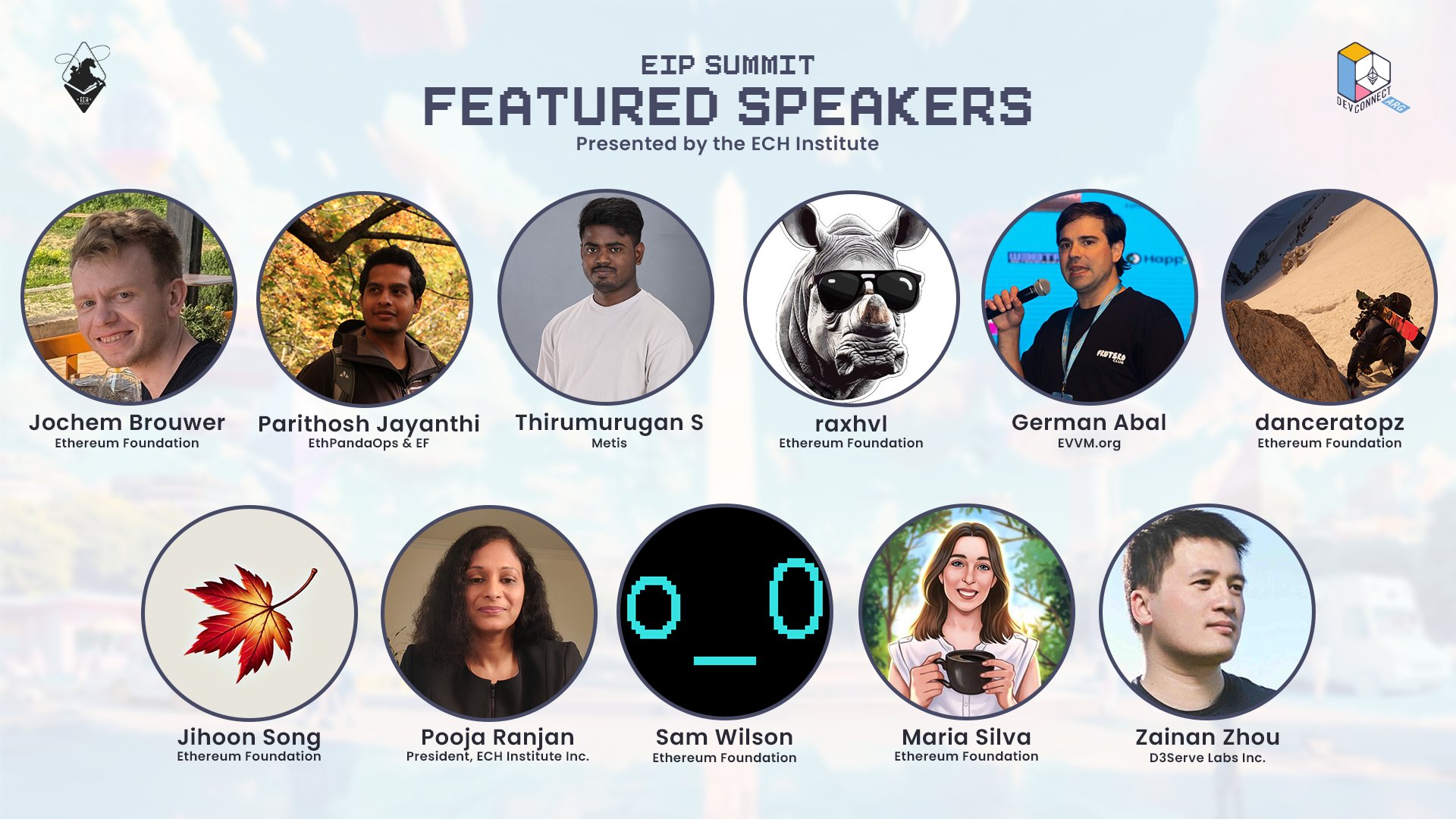
The Summit opened with a keynote on “EIPs in Motion: From Research to Reality” by Pooja, then moved through tightly scoped talks and lightning sessions with EIP authors, editors, and core developers on their personal journeys and specific proposals.
The first block of talks focused on how individuals can shape Ethereum. In “Don’t just use Ethereum: Help shape it!”, Jochem stressed that anyone, from everyday users to core developers, can participate in the EIP editing process, not just a small inner circle. The talk highlighted how much discussion is currently scattered across forums, calls and chats, and encouraged attendees to use Fellowship of Ethereum Magicians and to post summaries so feedback reaches authors instead of being lost in long threads or unrecorded calls. This is further echoed by EIP Editor, Sam, who emphasized that the EIP process is an author-driven process and individuals should take the initiative to coordinate and gather community feedback.
Jihoon’s “From Draft to Inclusion: A Proposal’s Journey” mapped the formal path an EIP follows once an idea is written up. Using practical discussion forums and platforms like HackMD, the Eth R&D Discord, EthResearch, Ethereum Magicians and the All Core Devs calls, he showed how proposals are communicated, refined and eventually considered for inclusion in a network upgrade. Extra emphasis was placed on large or contentious changes where authors are encouraged to surface concerns early, talk directly with different stakeholder groups and make sure specifications and client implementations are ready before asking for inclusion in a fork. These sentiments were also echoed by German who shared his experience as a first-time author, from proposing an idea to presenting and championing it in the community.
The next set of talks shifted to making sure that Ethereum Improvement Proposals are ready for inclusion. In “From Spec to Sync: Ensuring Upgrade Readiness”, Parithosh outlined how EIPs move from walls of text into executable consensus specifications and cross-client test suites. He described consensus specs and tests as living repositories that define “what Ethereum is” and stressed the importance of spinning up local devnets and catching interoperability bugs before mainnet forks.
That theme of turning specifications into running code continued in “Code is Law: Avoiding Spec-ulation for Faster Forks”, presented by Dan and Raxhvl. They examined pain points with traditional test-driven approaches, where tests can be hard to read and sometimes are out of sync with specs. They contrasted earlier eras of executable tests with the emerging era of executable specifications such as EELS, arguing that review should increasingly be grounded in these specs, treating “code as law” to reduce off-code debates and give clearer, faster feedback.
Turning on Glamsterdam upgrade, gas repricing economics formed another major talking point in scaling L1. In her presentation “Repricings: EIP-8007”, Maria introduced EIP-8007 as a meta EIP cataloguing proposed changes to the gas pricing model for the Glamsterdam fork. Rather than determining gas costs directly, EIP-8007 serves as an overview so client teams and the wider community can see the full set of repricing proposals in one place. Maria also discussed how some EVM operations appear overpriced, limiting throughput, while others are underpriced and risk becoming bottlenecks or attack vectors. With the upcoming changes to ePBS and BALs in Glamsterdam, there is a high need for gas repricing changes for better harmonisation and scaling.
The Summit also highlighted proposed standards in the ERC space. “ERCs in Focus – ERC-8028: AI Assets On-Chain with Data Anchoring Token (DAT)” by Thiru introduced an ERC standard that explained how DAT brings AI assets on-chain with clear proof of origin and usage. Public descriptions around the session emphasise enabling on-chain verification of off-chain AI artefacts, linking them to verifiable metadata and infrastructure for agent-to-agent interactions. The ERC-8028 is part of a broader effort among builders to make Ethereum a coordination layer for AI-native applications.
Last but not least, Victor Zhou shared virtually on ERC-1202: Voting Standard. ERC-1202 is a reusable, composable voting primitive replacing ad-hoc governance contracts. The ERC focuses on proposal lifecycle, ballot types and result interpretation, supporting multiple voting schemes. Victor encourages builders integrating ERC-1202 to reach out to him.
Taken together, the EIP Summit framed protocol work as a continuum: from individuals noticing problems, to drafting and refining proposals, to expressing them in executable specifications and shipping coherent network upgrades.
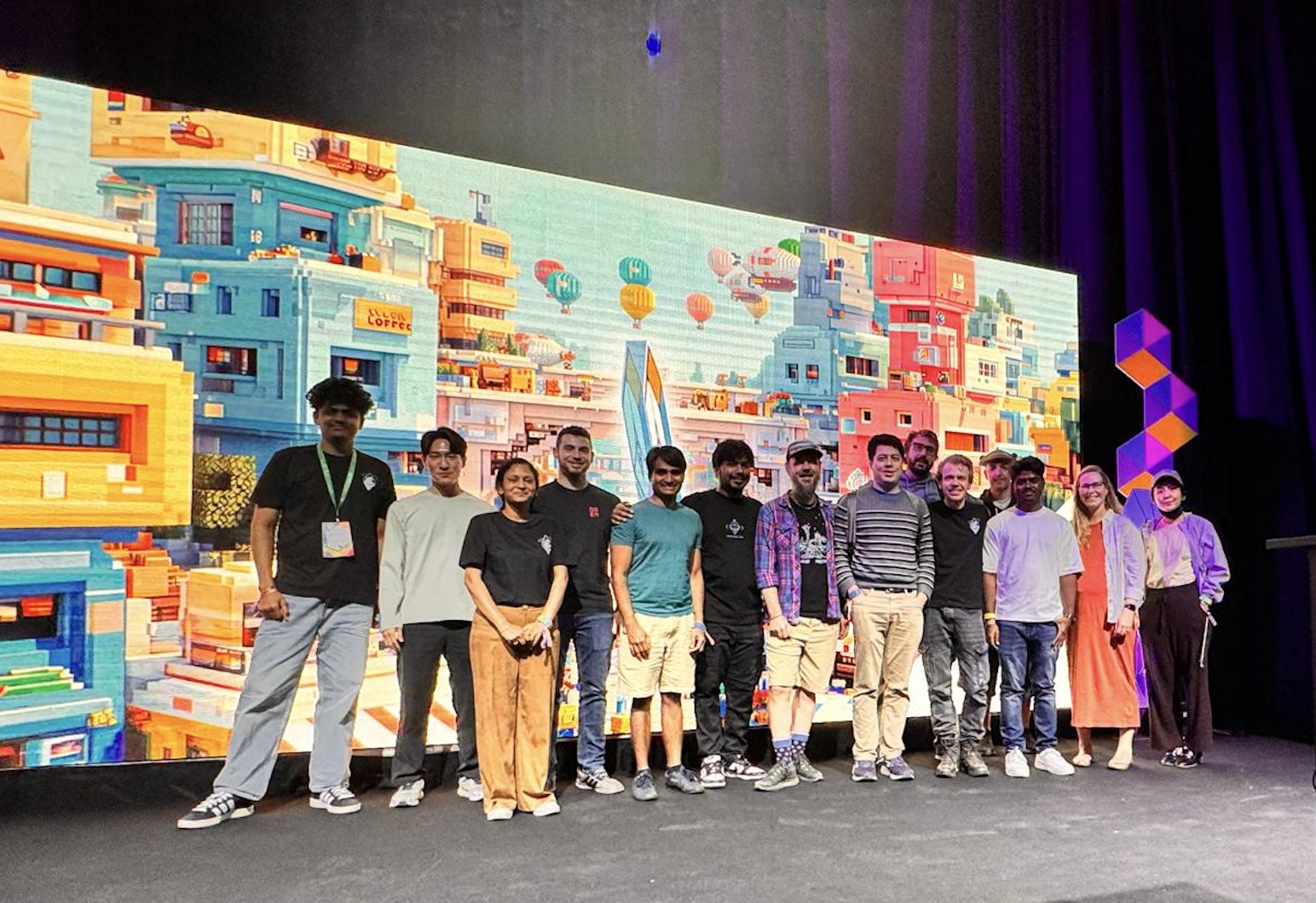
Missed the EIP Summit at Devconnect?
Catch the full recordings from Devconnect here:
- Full recording of EIP Summit
- From Research to Reality - An EIP’s Journey with Pooja Ranjan
- Don’t just use Ethereum: help shape it! with Jochem Brouwer
- From Draft to Inclusion: A proposal’s Journey with Jihoon Song
- From Spec to Sync: Ensuring Upgrade Readiness with Parithosh Jayanthi
- Code is Law: Avoiding Spec-ulation for Faster Forks - Revamping the EIP Review Process with Danceratopz & raxhvl
- EIP-8007: A major update to EVM gas prices with Maria Inês Silva
- From Idea to EIP: A First-Time Author’s Journey" with German Abal
- ERCs in Focus - ERC-8028: AI Assets On-Chain with Data Anchoring Token (DAT) with Thirumurugan S
- Meet EIP Editor Sam Wilson
- ERC-1202: Voting Interface with Victor Zhou
Podcasts at Devconnect
Apart from EIP Summit and the WiEP networking brunch, we also recorded several podcasts with builders and core developers in this space.
Protocol Pop-Ins with Mike McCabe | 0xbow | Privacy Pools | Devconnect Special 2025
Mike McCabe touched on the importance of enabling privacy on Ethereum, for both everyday users and institutions. Significantly, he addressed the challenges for building privacy projects such as 0xbow’s Privacy Pools, echoing cautionary tales from Tornado Cash and the opportunities in building a compliant-first privacy tool, unlocking privacy for everyday users and enterprises.
Protocol Pop-Ins with Lodestar Team | Devconnect Special Podcast with Matthew, Phil & Cayman
Matthew, Phil and Cayman shared real-world use cases such as zk-identity implementation in Bhutan and their excitement working in Ethereum, maintaining scale and security for trillions of dollars. They also highlighted the preparations the Lodestar team made for Fusaka upgrade and planning ahead for future forks.
Better EIP Reviews with Jochem Brouwer | Devconnect Special | ECH Institute
As an EIP Editor, Jochem highlighted the need for more feedback especially for ERC proposals, the importance of raising feedback as soon as possible rather than belatedly at ACD calls.
From Hackathon to Devconnect with Thiru | Metis | Devconnect Special Podcast | ECH Institute
Winning nearly 30 hackathons, Thiru shared how hackathons shaped his career, get employed and travel around the world. He also touched briefly on DAT ERC standard and working at Metis.
Fusaka Files Spotlight: Special last episode with Tomasz Stańczak
On the final days at Devconnect, we recorded the last episode of the Fusaka Files, a short series that focused on Fusaka readiness for enterprises.
Tomasz, the Executive Director at Ethereum Foundation joined the podcast, touching on credible neutrality especially for institutions, the role of Layer 2 solutions and how the Ethereum Foundation through All Core Dev calls enable open and transparent EIP process.
Tomasz emphasized the ability for anyone to participate in building Ethereum.
Check out the special episode on Youtube!
Check out the rest of the Fusaka Files series here!
Thank you!
We would like to thank all community members, speakers and attendees for making Devconnect so special! We hope that everyone has enjoyed their time and made meaningful connections.
Special thanks to our team - Akash Kshirsagar, George Hervey, Vaelyn Luo & Pooja Ranja for bringing ECH Institute to Devconnect ARG.
Till next time!